The official reopening of the site took place on October 4, 2025, strategically timed just weeks ahead of the long-awaited debut of the Grand Egyptian Museum near the Giza Pyramids on November 1, 2025. French engineers Prosper Jollois and Édouard de Villiers du Terrage first located the tomb in 1799 during Napoleon’s Egyptian campaign.
And now, visitors can now descend 46 feet underground into the newly reopened tomb of Amenhotep III, one of ancient Egypt’s most powerful rulers. Closed to the public for the past two decades, the 3,400-year-old site has officially been reopened just ahead of the historic debut of the Grand Egyptian Museum.
British archaeologist Howard Carter later conducted a full excavation in 1915. By then, however, looters had stripped the chamber bare centuries earlier.
The restoration ran in three distinct phases over more than 20 years, with teams working from 2001 to 2004, 2010 to 2012, and 2023 to 2024. A collaboration of Egyptian, Japanese, and international teams led the effort. They focused on cleaning, conservation, and repairing the damaged wall paintings, which depict Amenhotep III alongside his royal consort, Queen Tiye. “Two hundred and sixty representatives over these 20 years — researchers specialised in conservation, technicians with particular skills. I think this is a special achievement,” said Nuria Sanz, UNESCO’s regional director in Egypt.
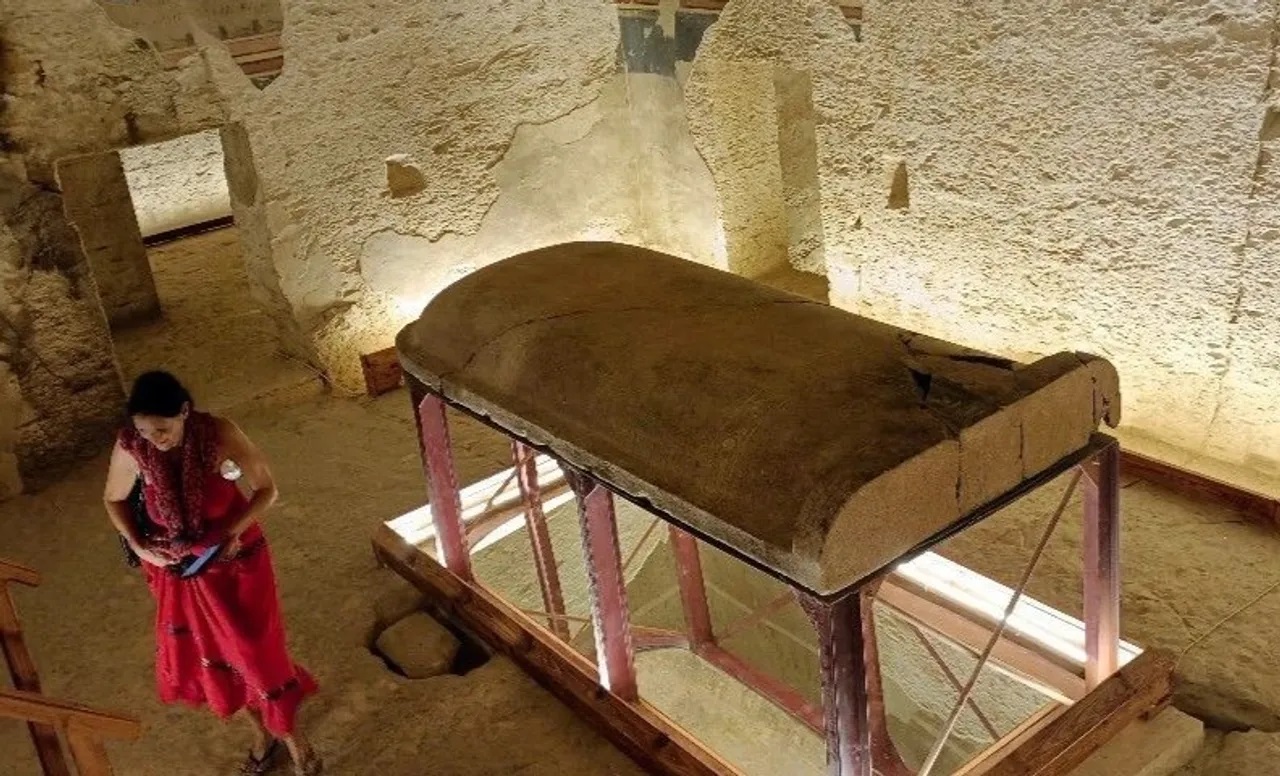
Even without its original treasures, the tomb still shows remarkable splendour. Vibrant, weathered paintings line the walls alongside sacred hieroglyphs drawn from the Book of the Dead. These texts were intended to guide the pharaoh safely into the afterlife. “You can still see the frame of the stolen sarcophagus box, with its lid preserved in the place where it once rested,” said Mohamed Ismail, secretary-general of Egypt’s Supreme Council of Antiquities, during the launch.