New opportunities are opening up for researchers at the “Greater Altai” Research and Education Center (REC) for Altaic and Turkic Studies: Altai State University (AltSU) has become an associate member of the International Institute for Central Asian Studies (IICAS). This new status provides tangible tools for advancing scientific research at the Eurasian level.
The decision to approve AltSU’s application was made during the 29th session of the IICAS Academic Council on September 26 in Antalya. For the university, this status represents more than just a formal partnership; it is a strategic move that expands opportunities for international collaboration and affirms the high caliber of the university’s research—particularly within the framework of the “Greater Altai” REC.
Roman Raikin, AltSU Vice-Rector for International Affairs and Youth Policy, emphasized the significance of the event and outlined prospects:
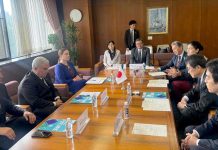
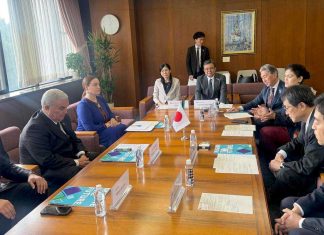
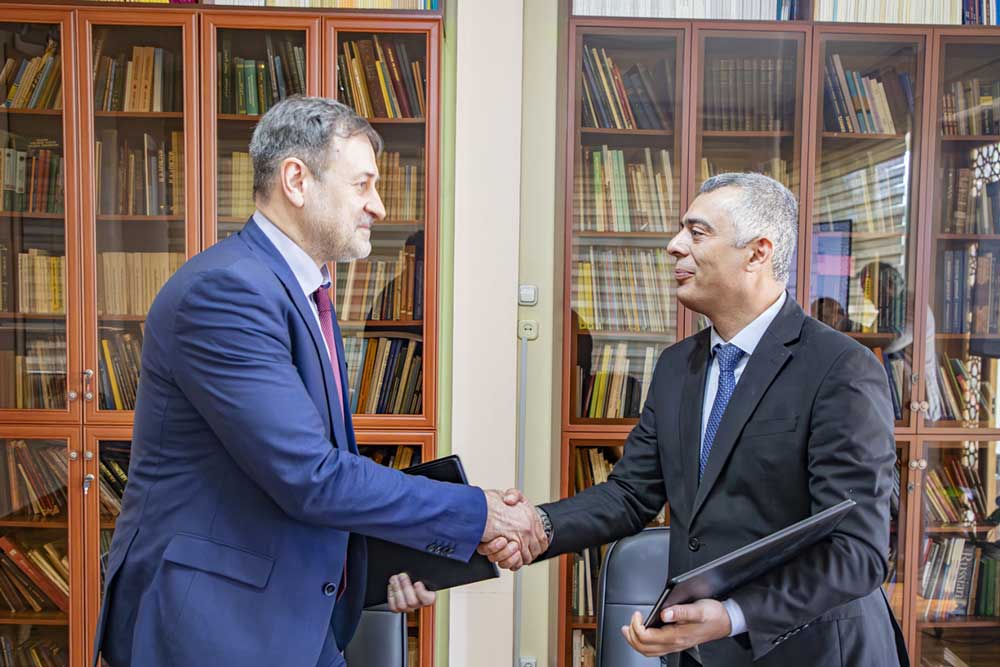
“Altai State University and the ‘Greater Altai’ REC gain the right to fully participate in joint research projects and grant programs of IICAS—a major institution uniting ten member states, including Uzbekistan, Kazakhstan, Turkey, China, and Kyrgyzstan. Our scientists will be able to publish their work in the prestigious *IICAS Bulletin* and participate in key international conferences, symposia, and internships organized by the Institute. This partnership will allow for the deeper integration of the ‘Greater Altai’ REC’s research agenda into the global context of studying the Eurasian region and the Silk Road, while also attracting new international partners and resources. We view this achievement as the result of systematic effort and as a powerful, practical tool for advancing science, education, intercultural dialogue, and media engagement.” Sergey Grushin, a leading expert at the “Greater Altai” Research and Education Center for Altaic and Turkic Studies and a professor in the Department of Archaeology, Ethnography, and Museology at Altai State University (Altai State University), discussed practical steps toward integrating with the institute’s operations. In early October, during a working visit to Uzbekistan, he met with the leadership of the International Institute for Central Asian Studies (IICAS), including the institute’s assistant director, Oybek Jabriev. The parties held a detailed discussion regarding the institute’s goals, objectives, organizational structure, and grant policy.
Sergey Grushin explained how these new connections will benefit researchers at Altai State University:
“The most important thing is that we now understand how the system functions from the inside—what requirements are set for grant applications, how the agenda for competitions is shaped, and how resources are allocated. This will enable our researchers to prepare projects in a targeted manner. It is significant that the areas of focus and primary objectives of IICAS largely align with the goals of our Research and Education Center. While the institute covers the broader Central Asian region, our scientific interests and approaches—spanning archaeology, ethnography, history, and the study of cultural heritage—overlap in many ways. Substantial support from the governments of member states, combined with ties to the diplomatic corps, allows the institute to organize grant competitions and fund scientific projects.”
According to Sergey Grushin, the grant cycle spans two years, and it will be possible to submit applications for the 2028–2029 period as early as next spring.
“Based on past experience, archaeological projects are in particularly high demand, though the range of topics is quite broad. Our researchers already have existing work that can be adapted to meet the requirements of the competition.”
Colleagues from IICAS plan to participate in the 5th International Altaistic Forum, which will be held in Barnaul in the autumn of 2027. This platform will allow for a detailed discussion of joint plans and the synchronization of future research.
Background: The International Institute for Central Asian Studies is an intergovernmental platform that coordinates the scientific work of 10 member states. The status of associate member enables universities to gain direct access to the Institute’s resources, apply for funding, and influence the research agenda, all without undergoing the formal, state-level accession process.