The plan, which the government intends to submit to Brussels by the end of the year, focuses on ensuring access to “decent and efficient” housing and developing “sustainable and affordable” mobility.
On Monday, the Spanish government presented a draft Social Climate Plan, which includes approximately 9 billion euros in public subsidies aimed at supporting mobility and the housing sector.
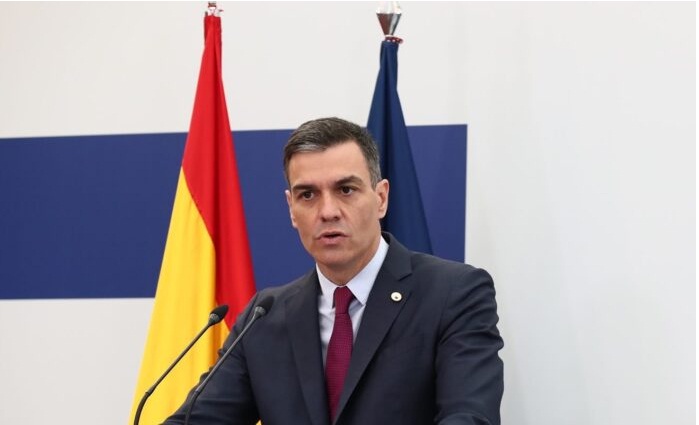
Pedro Sánchez emphasized the need to continue acting in the face of the climate emergency by ensuring a just environmental transition, stating that “the energy revolution cannot benefit only those who can afford to change cars, install solar panels on their roofs, or renovate their homes without state support.”
The plan allocates nearly €4.7 billion for housing policy measures to ensure vulnerable households are included in the transition and that a “culture of renovation and modernization of housing” reaches all neighborhoods, allowing for “improved quality of life” while reducing utility bills and pollutant emissions.
“So that we don’t have to choose between living until the end of the month or the end of the century.”
“The ecological transition will only be successful if it is just,” Sánchez emphasized during the plan’s presentation, advocating for it to cover all citizens and all regions of the country. “So that people don’t have to choose between living until the end of the month or the end of the century,” he warned, expressing concerns that progress on the environmental agenda could be slowed by climate denial and rhetoric that “cause great harm.”
The remaining 4.3 billion euros will be allocated to decarbonizing the transport and mobility sectors, including in rural areas, through subsidies for fleet renewal and measures aimed at transitioning to “practically free” public transport, in line with initiatives the government has been promoting in recent years.
The Prime Minister declared the need to accelerate the ecological transition and rejected the idea that tackling the climate crisis is incompatible with economic growth. Sánchez emphasized that emissions have decreased by 19% since 2018, and the share of renewable energy in electricity generation has increased from 39% to 56%, while simultaneously creating jobs and growing the economy.
Sara Aagesen, Third Deputy Prime Minister and Minister for the Ecological Transition and the Demographic Challenge, emphasized that the new plan is “a key tool for challenging times” when “the climate emergency has become a reality.” In this regard, she called for continued focus on the green agenda, one of the policy pillars of the current cabinet.
The plan, which the government hopes to submit to Brussels by the end of the year, rests on two pillars: ensuring access to “decent and energy-efficient” housing and developing “sustainable and affordable” mobility.
Transport Minister Oscar Puente reiterated the need to guarantee access to mobility as a “fundamental right.” He stated that the new plan could help strengthen the understanding that the energy transition should not be perceived as a burden, but as an opportunity for transformation.
Similarly, Housing Policy Minister Isabel Rodríguez linked the project to recent protests in defense of the right to decent housing and presented it as a new phase in the government’s recovery plan. Rodríguez highlighted the results achieved within its framework and stated that the fight against climate change must remain a political priority, particularly for the protection of the most vulnerable segments of the population.