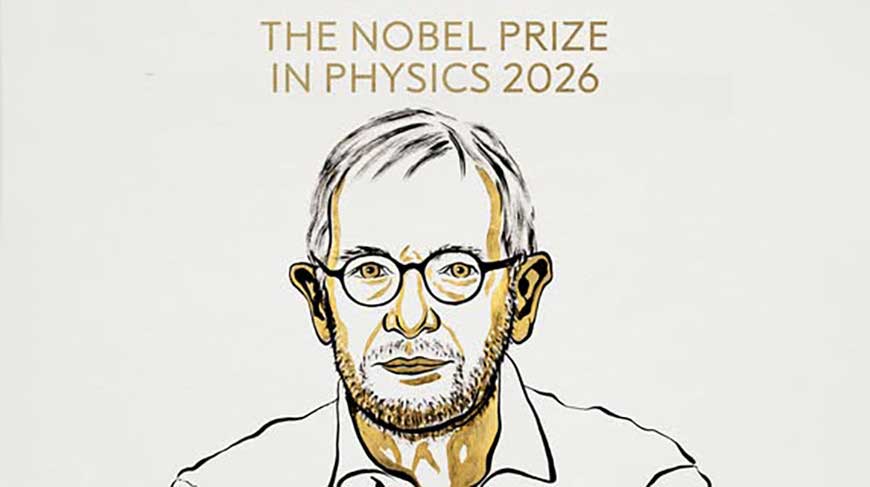
On October 6, Nobel Prize in Physics was awarded to the Belgian scientist Francis Halzen for his significant contributions to the work of the IceCube Neutrino Observatory and the discovery of high-energy neutrinos of astrophysical origin.
This prestigious award was presented to Francis Halzen, the head of the research center located at the Amundsen-Scott South Pole Station in Antarctica, which is designed to capture mysterious particles — often referred to as “ghost particles of the universe”—using the ice of the South Pole.
Key achievements of this major scientific facility include the first-ever detection of astrophysical neutrinos in 2013, followed by the acquisition of data regarding active galaxies and objects within the Milky Way.
Additionally, as part of the Nobel Prize week currently underway, the winners in the fields of chemistry, literature, peace, and economics will be announced on October 7, 8, 9, and 12, respectively. Between 1901 and 2025, this prize in physics was awarded a total of 119 times; the youngest laureate was 25-year-old William Lawrence Bragg and the oldest was 96-year-old Arthur Ashkin, while John Bardeen received the award twice.