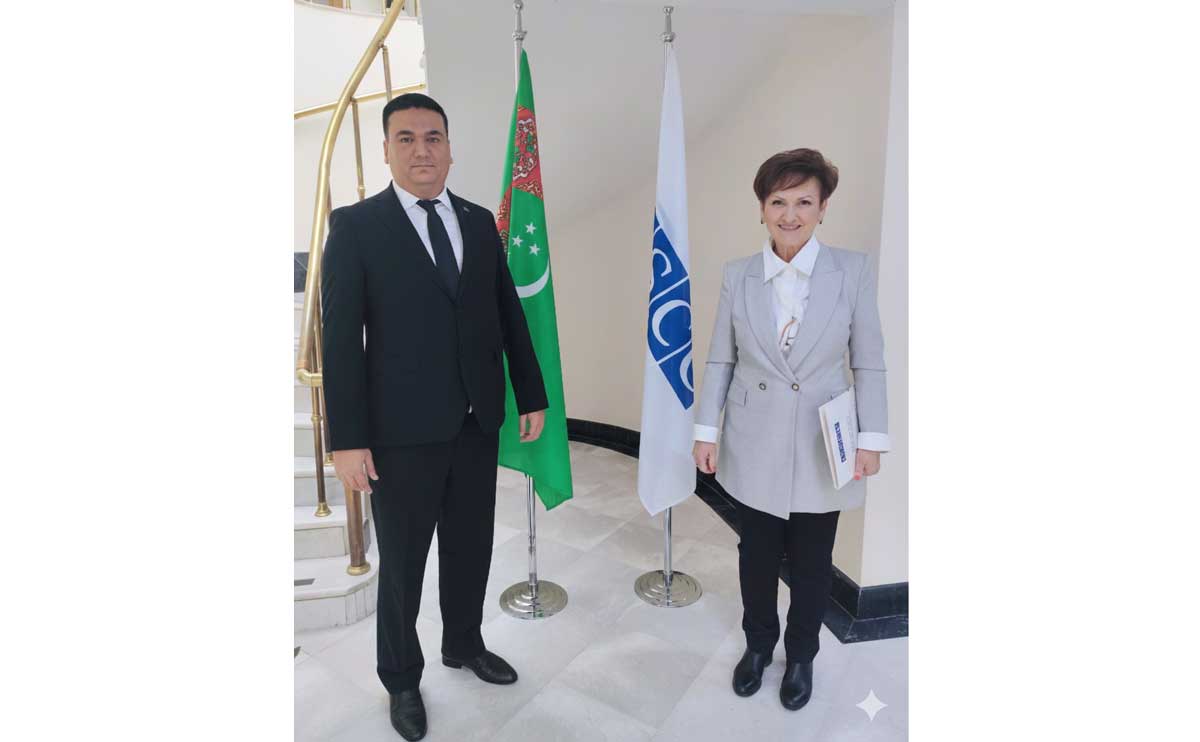



From January 20 to 22, a national seminar on the implementation of the Biological and Toxin Weapons Convention (BWC) in Turkmenistan was held in person at the Organization for Security and Cooperation in Europe (OSCE) Center in Ashgabat.
The main goal of the event was to raise awareness among relevant government agencies of the provisions of the Convention and to promote its consistent and effective implementation at the national level. Particular attention was paid to strengthening interagency coordination and developing national capacity in the field of biological security.
Representatives of government agencies working in the areas of biosecurity, sanitary-epidemiological and veterinary surveillance, and goods and cargo control, as well as representatives of scientific and academic institutions, participated in the seminar. The event brought together key national stakeholders involved in the implementation of the Biological Weapons Convention in Turkmenistan.
Participants included representatives of the Ministry of Foreign Affairs, the Ministry of Defense, the Ministry of Trade and Foreign Economic Relations, the Ministry of Health and Medical Industry, the Ministry of Agriculture, the Ministry of Environmental Protection, the Ministry of Internal Affairs, the Ministry of National Security, the State Customs Service, the State Border Service, and the Academy of Sciences of Turkmenistan.
Arslan Soltanmyradov, Head of the Department of International and Scientific Relations, delivered a welcoming and keynote address on behalf of the State Veterinary Service under the Ministry of Agriculture of Turkmenistan. In his address, he noted the significant role of the veterinary service in ensuring the national biological security system, emphasizing the contribution of veterinary and technical supervision, laboratory control, and scientific support to the prevention and early detection of particularly dangerous animal diseases.
The presentation emphasized the need for strict compliance with veterinary and sanitary requirements, improved monitoring and information exchange mechanisms, and the development of international cooperation.
The seminar will include training sessions on the preparation of annual national reports on confidence-building measures provided for by the Convention. The seminar also serves as a platform for exchanging views on international assistance and cooperation aimed at further strengthening biosecurity at the national level.
Experts from the Organization for Security and Cooperation in Europe, United Nations agencies, including the UN Office for Disarmament Affairs, as well as technical specialists from Hungary and Tajikistan, and representatives of regional and international organizations have been invited to participate in the event.
Holding this national seminar reflects Turkmenistan’s consistent commitment to its international obligations and confirms the state’s desire to further strengthen its national capacity in the area of biosecurity, including veterinary and sanitary control.