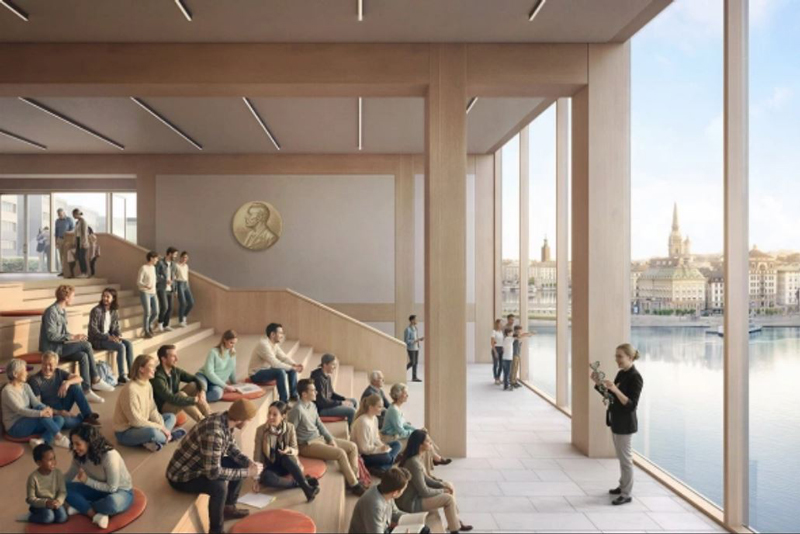



German architecture studio David Chipperfield Architects, together with local studio Sweco Architects, have developed and unveiled a design for a Nobel Center in Stockholm. The building is planned for the waterfront of Södermalm Island, according to a report by Dezeen.
According to the design, the building will house spaces for seminars, lectures, events, and exhibitions showcasing the achievements and stories of Nobel laureates in science, literature, and peace.
Construction of the 13 000-square-meter building is scheduled to begin in 2027, with completion of the Nobel Center scheduled for 2031. The Nobel Center will be constructed primarily of wood, with its façades clad in reclaimed red brick. The choice of this building material is no coincidence. Brick has been a characteristic feature of Stockholm architecture for centuries. The red hue is common in classic brick city buildings, such as the City Hall.
The ground floor is planned to house a foyer, a shop, and a restaurant, opening onto an open terrace overlooking the water. A promenade will form a route connecting the nearby Photography Museum (Fotografiska), which hosts exhibitions and workshops, and the Stockholm City Museum (Stadsmuseet), according to the announcement.
The Erling-Persson Foundation and the Knut and Alice Wallenberg Foundation, which will contribute 2.3 billion Swedish kronor, will fund the Nobel Center project. The total cost of the project is estimated at 2.5 billion kronor ($271 million), with the remainder coming from the Nobel Foundation.
Visitors to the new museum will be able to attend lectures, view exhibitions, participate in dialogues, and participate in cultural events. According to Hanna Stjerne, Executive Director of the Nobel Foundation, it will be a home for science, literature, and peace, a center of power embodying the Nobel Prizes, and a source of inspiration not only for current visitors but also for future generations.
“With its prime location on the Slussen embankment, the building has a strong public presence and also reflects the broader significance of the Nobel Prize. At a time when expert knowledge and informed debate are more important than ever, we hope the Nobel Center will become a sustainable space for knowledge and exchange,” says David Chipperfield, founder of David Chipperfield Architects.