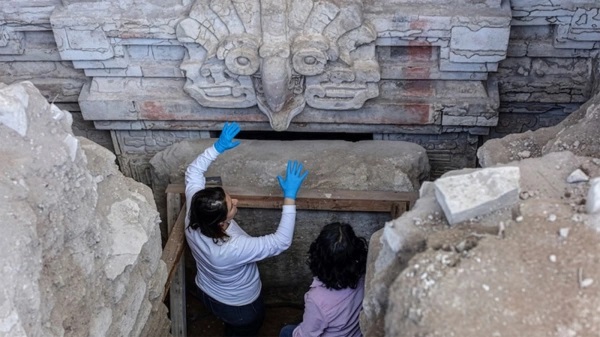



Archaeologists from the National Institute of Anthropology and History (INAH) in the Mexican municipality of San Pablo Huitzo have discovered a Zapotec tomb. It has been preserved almost in its original state and dates back to approximately 600 CE, according to Artdaily.
The entrance to the tomb is decorated with a monumental relief depicting an owl and a painted red stucco face of a Zapotec ruler. Scholars believe this image may represent the ancestor to whom the tomb is dedicated. Massive doorframes carved with male and female figures wearing ceremonial headdresses also frame the entrance.
Inside, archaeologists discovered a frieze of multicolored stones engraved with calendar signs and doorframes depicting guardians. The walls of the tomb are covered with a vibrant polychrome fresco depicting a ceremonial procession. Participants carry vessels of copal—a tree resin used as incense—to the entrance. The fresco features shades of ochre, white, green, red, and blue.
Mexican President Claudia Sheinbaum called the discovery “the most significant archaeological discovery of the last decade in the country.” She noted that the tomb offers insight into the social structure, beliefs, and ritual life of the Zapotec people.