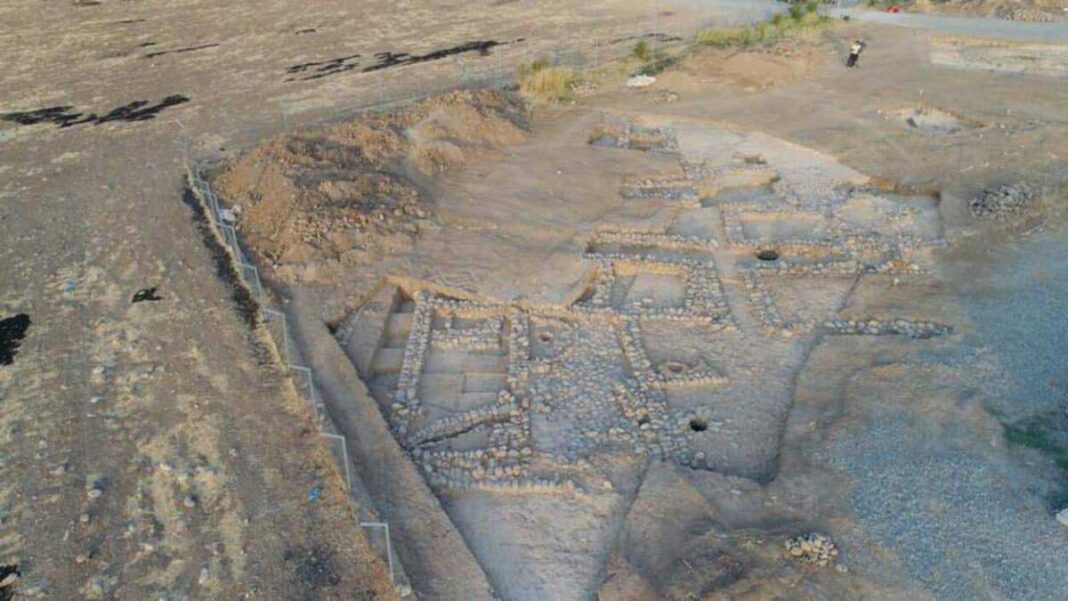



In Iraq, archaeologists have discovered a 3,000-year-old pottery workshop, preserved in exceptional condition. The discovery has provided insight into craft production, urban life, and social organization in the ancient Near East.
The Iron Age workshop was discovered in the Dinka settlement. According to researchers from the University of Tübingen (Germany), the workshop dates back to approximately 1200-800 BCE. The results of the study were published in the Journal of Archaeological Science.
Archaeologists found two kilns, ceramic fragments, fuel remains, and layered deposits. The finds revealed the entire production chain—from raw clay processing to finished vessels, Naked Science reports. According to the scientists, this is one of the most comprehensive studies of ancient Near Eastern pottery production.
Lead researcher Silvia Amicone explained that the excellent condition of the workshop allowed the scientists to reconstruct the entire production process. The team studied raw clay, finished vessels, kiln linings, and traces of fuel. The researchers concluded that the workshop operated according to a structured and modular production system. It supplied not only the settlement itself but the entire region.
The study revealed that the potters used low-temperature firing methods. The strict production of ceramics indicates that the artisans possessed technical knowledge. The team believes that these rules were passed down from generation to generation, and the artisans meticulously monitored the process to ensure high-quality pots.
The discovery challenged archaeologists’ notions that Iron Age workshops were informal or loosely structured. The find revealed that even then, work in the workshops was well organized, processes were interdependent, and artisans followed common craft traditions. All of this fostered trade and connections between regions.