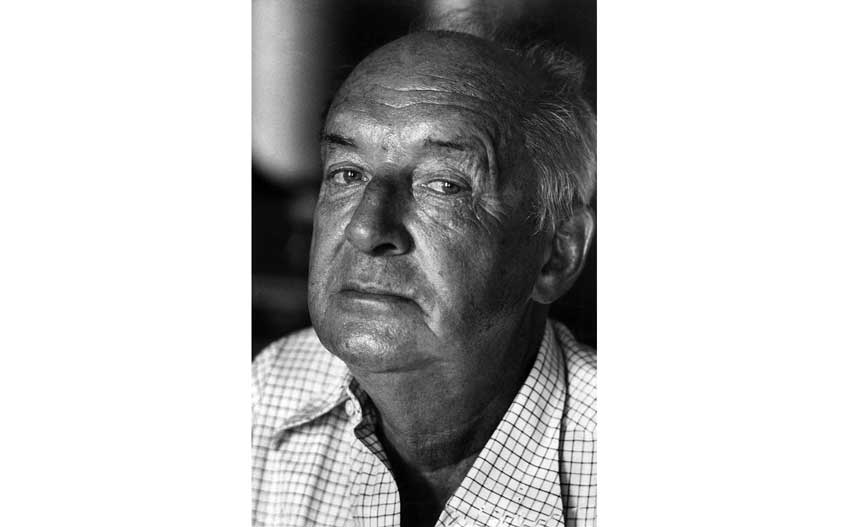



Russian and American writer, poet, and translator Vladimir Nabokov (1899-1977) was nominated for the Nobel Prize in Literature 11 times, but never received it. The Swedish Academy has published archival documents, kept secret for 50 years, indicating that the 11th nomination took place in 1975.
Lists of nominees from 50 years ago, reviewed by a TASS correspondent, indicate that six literary scholars from universities in the United States, Germany, and the Netherlands proposed Nabokov’s candidacy. “Nabokov, the author of twenty novels and several volumes of poetry and short stories, created over more than half a century one of the most brilliant bodies of work by a living writer. It includes four undisputed masterpieces: The Gift, Invitation to a Beheading, Lolita, and Pale Fire. I would especially emphasize that he is not an émigré writer in the narrow sense; he is a writer who transcends political definitions, eloquently and convincingly advocating for the intrinsic values of imagination and art. I would also add that his work reflects something far greater than narrow aestheticism; his self-aware prose contains a profound moral undercurrent: he described again and again how man struggles to remain human in an increasingly inhuman world,” wrote University of California professor Robert Elter in his nomination letter.
Nevertheless, the Nobel Committee, in fact, did not consider the writer’s candidacy. Swedish academics were unwavering in their earlier verdict: “Vladimir Nabokov: the proposal was rejected several times,” stated documents from the 1973 archive.
Nabokov was nominated for the Nobel Prize in 1963, 1964, 1965, 1966, 1968, 1969, 1970, 1971, 1973, and 1974.