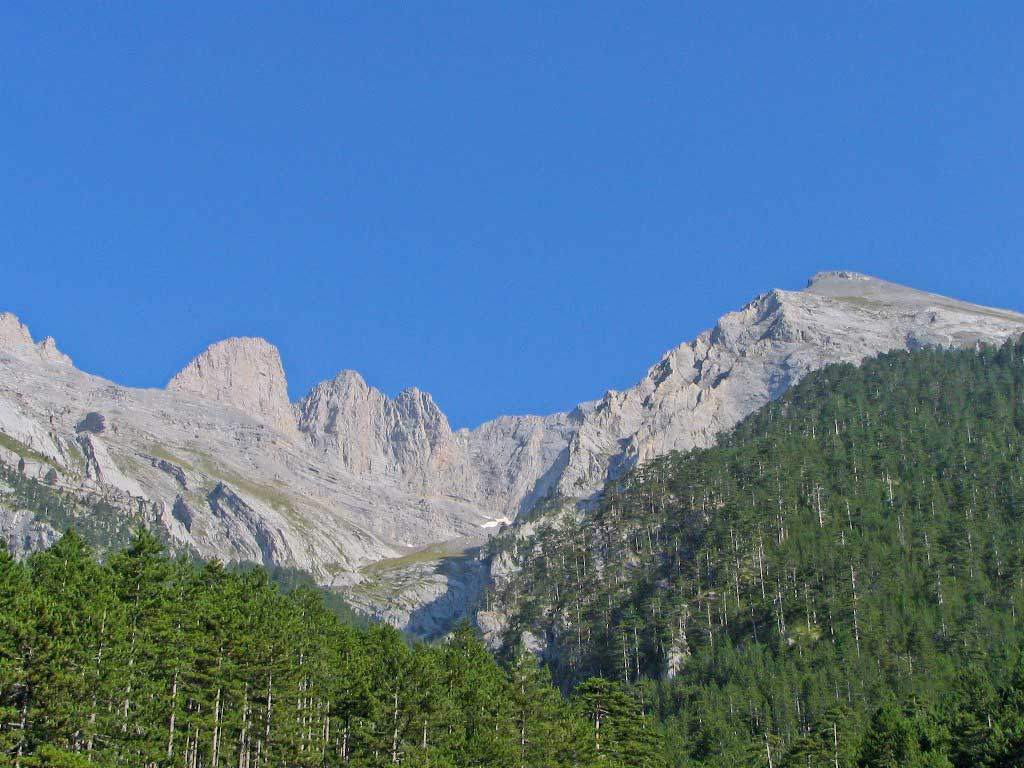
The inclusion of Mount Olympus on the World Heritage List would be a significant step in the international recognition of this mythical site, which is simultaneously a historical and natural monument.
The mythical abode of the ancient Greek gods has been included among the candidates for inclusion on the UNESCO World Heritage List. Mount Olympus’s nomination as a mixed site of natural and cultural value is scheduled for consideration at the current session of the World Heritage Committee, which will be held from July 19 to 29 in Seoul.
Mount Olympus is the highest mountain in Greece, reaching an altitude of 2,918 meters above sea level. But it is more than just a unique natural monument.
For centuries, Olympus was a central site in Greek mythology, as, according to legend, it was here that the 12 gods of the ancient world, led by Zeus, dwelled. At the same time, this mountainous landscape encompasses a rich ecosystem with rare species of flora and fauna.
Greece submitted a bid to inscribe the wider Olympus mountain range on the UNESCO World Heritage List back in 2014. However, international experts from IUCN and ICOMOS, UNESCO advisory bodies, requested data to supplement the dossier.
According to their comments, more comprehensive information is needed on the geological features, biodiversity, and ecological processes in the region. The experts also recommended further elucidation of the site’s cultural value and proposed including the archaeological complex of Dion at the foot of Olympus.