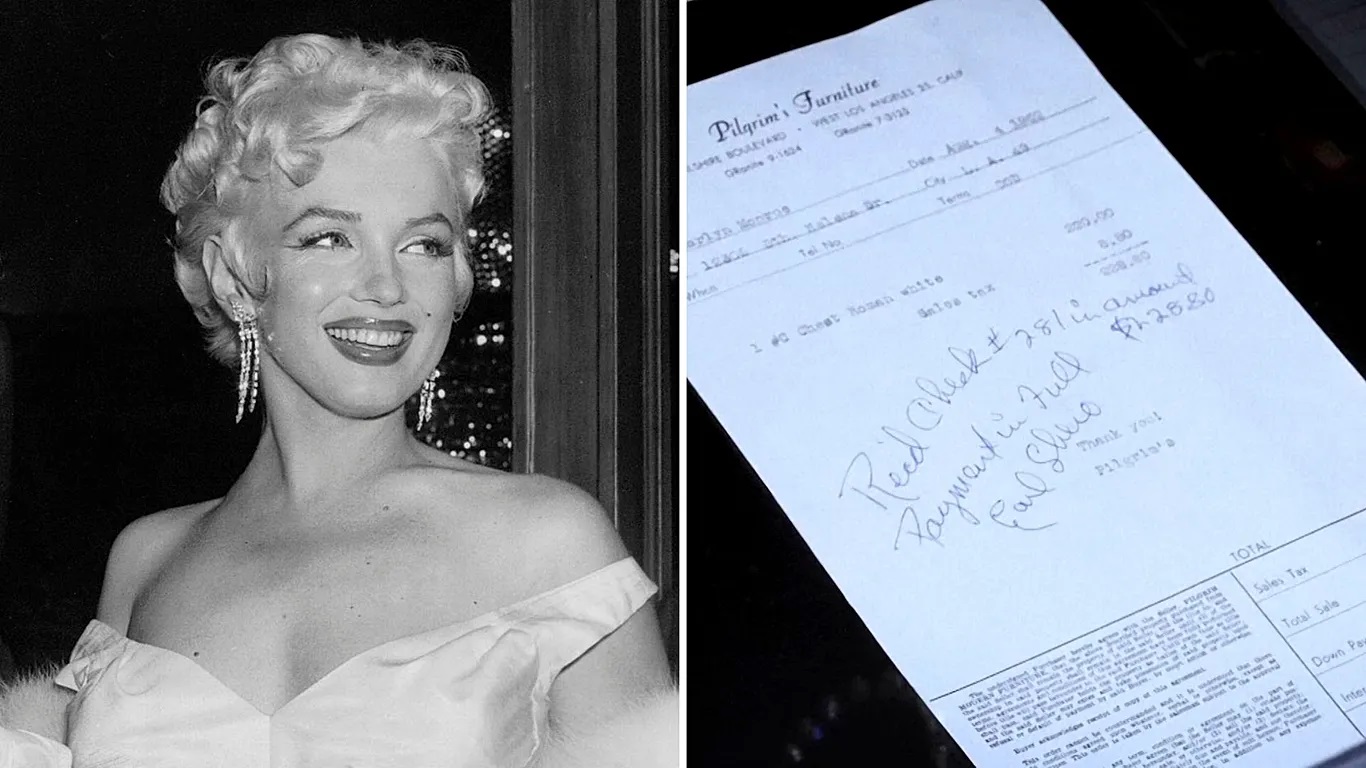



Previewed in New York, the Icon Collection brings together clothing, documents, and personal items, including Monroe’s last signed check and items related to her famous 1962 speech to President John F. Kennedy.
Rare personal items once owned by Marilyn Monroe will soon be featured in a new exhibition dedicated to the life and legacy of the Hollywood legend.
Key pieces from the Icon Collection—a private archive that includes clothing, documents, photographs, and cinematic rarities associated with the star—were recently unveiled at a private viewing at New York’s Waldorf Astoria Hotel.
Collector Brian Jones, owner of the Icon Collection, said his fascination with Monroe began in childhood.
“I think it all started when I was little and found a Playboy magazine under my dad’s bed,” he recalls, referring to the famous calendar photo of Monroe in red velvet. The discovery sparked a lifelong interest that eventually grew into one of the most extensive private collections devoted to the actress.
Jones considers one of the most significant items to be perhaps the last check Monroe signed on the day of her death in August 1962. The document concerns the delivery of furniture for her newly purchased home in Brentwood, California—the first home she owned.
According to Jones, handwriting experts who examined the check noted a smooth, confident signature, suggesting the actress was busy furnishing the home and planning for the future.
Other items link Monroe to one of the most famous moments in American pop culture history: her performance at President John F. Kennedy’s birthday party at Madison Square Garden in 1962.
The archive includes the program for that evening, as well as a handwritten confirmation card indicating the actress personally paid for tickets for five guests to the concert.
Some of the pieces offer a glimpse into Monroe’s creative laboratory and reveal how she developed her iconic image. One of the most notable pieces is a mirror from her Brentwood home, in front of which she is said to have spent hours studying her reflection and honing the look that became synonymous with global fame.
The collection also highlights Monroe’s influence on fashion, showcasing unfinished dresses tailored to her figure, comfortable casual wear, and pieces from the Italian house of Pucci—one of her favorite brands in the early 1960s.
Together, these pieces reveal the contrast between the private woman Norma Jeane Mortenson and Marilyn Monroe—the larger-than-life persona she created that eclipsed the real person.
A number of the items shown in New York will be included in the upcoming exhibition “Marilyn Monroe: Hollywood Icon,” which opens May 31 at the Academy Museum of Motion Pictures in Los Angeles.