


Nepalese authorities have announced the launch of a five-year comprehensive action plan to clean up Mount Everest, often referred to as the world’s highest garbage dump.
According to the publication, the pollution crisis at the planet’s highest peak has been exacerbated by climate change: melting snow and ice is “exposing debris long buried under the ice cap, as well as human remains, increasing the risk of watershed pollution and posing a health threat to downstream communities.”
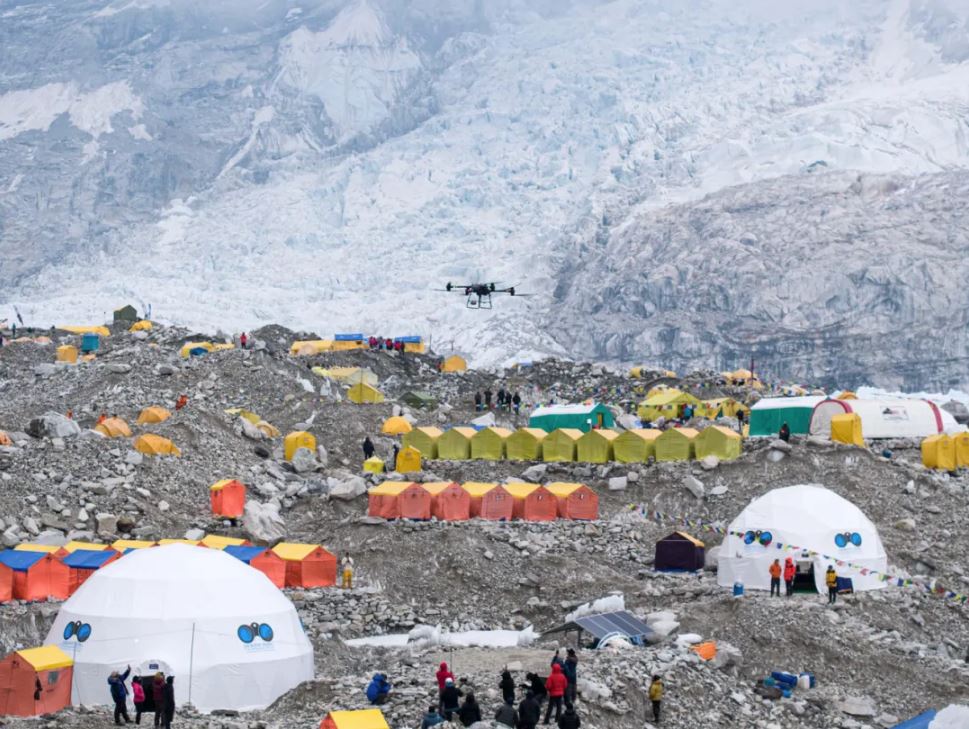
According to the program announced by the Himalayan state’s Ministry of Culture, Tourism, and Civil Aviation, a “feasibility study” is also planned for the relocation of Everest Base Camp (located at an altitude of 5364 meters) amid growing environmental concerns. It stretches more than a kilometer along the Khumbu Glacier and is located on a constantly shifting, melting glacier stream laden with boulders. Surrounded by towering, massive ice floes, the area becomes particularly unstable in the summer, when meltwater flows down the glacier.
During the spring climbing season, the base camp turns into a dense tent city housing hundreds of climbers and support staff with stoves, heaters, and generators, further increasing the environmental impact.
“The government has decided to explore the possibility of relocating the base camp to ensure the stability of the mountain range,” said Himal Gautam, head of the Department of Tourism. “The camp is overcrowded and in a vulnerable position, and the study will assess the viability of an alternative location,” he said.