


Turkmenistan consistently strengthens international cooperation aimed at training highly qualified professionals and continuously improving their professional skills. The country actively integrates into the global educational community and expands mutually beneficial partnerships with prestigious international organizations and many countries — including the Russian Federation, which is considered a strategic partner.
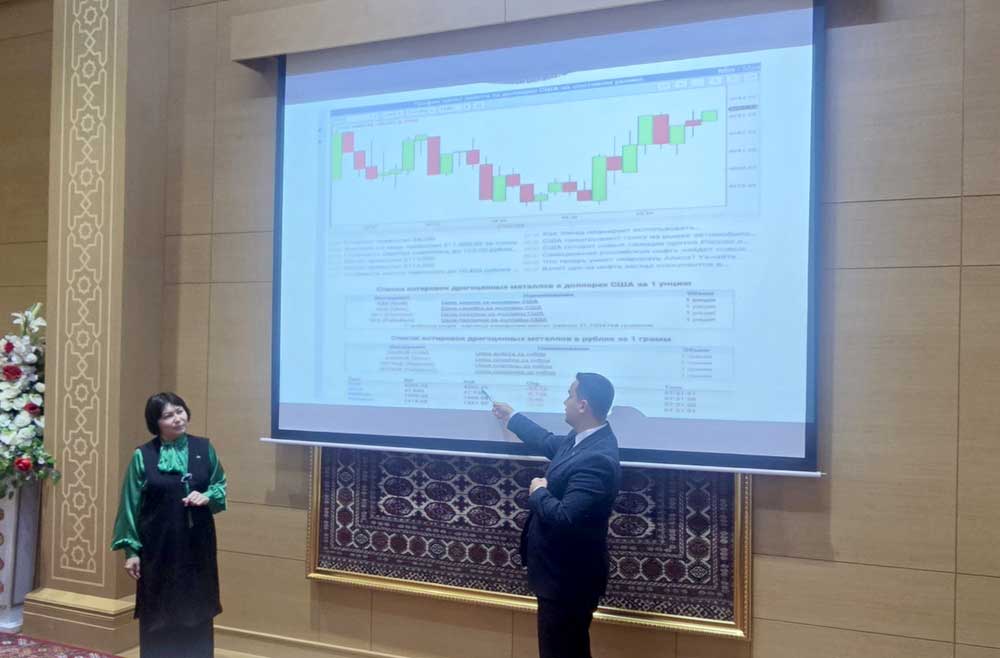
Within this framework, on October 20 of the current year the Ministry of Education of Turkmenistan and the National Institute of Education organized professional development training sessions for teachers at the modern building of the Aman Kekilov Pedagogical School. Professors and lecturers from the Naberezhnye Chelny State Pedagogical University of the Republic of Tatarstan, Russian Federation, were conducting these practical and methodological courses.
Participants included educators from Ashgabat, Arkadag, all regional educational institutions, rehabilitation and training centers, institutes, and universities across the country.
Participation in the training devoted to the development of professional competence and communicative culture of educators has been a highly significant and intellectually enriching experience. During this training, participants discussed variety of topics. One of them is “Professional competences and skills of a modern teacher as a condition for the student’s personal growth,” deepened the understanding of the integral role of the educator in shaping the intellectual and personal development of students. The sessions emphasized that continuous professional self-improvement is an indispensable prerequisite for ensuring students’ successful learning outcomes and personal growth. This realization encouraged me to adopt a more systematic approach to self-assessment and lifelong professional learning.
The second theme, “Foundations of communicative culture of the teacher and effective techniques of pedagogical communication,” highlighted the decisive importance of communication in the educational process. A teacher’s communicative culture manifests itself in linguistic precision, emotional intelligence, empathy, and the capacity to create an atmosphere of mutual respect and trust. Of particular interest was the introduction of the POPS method (Position, Explanation, Example, Summary), which provides a clear structure for argumentation and the presentation of ideas. The third topic, “The competence-based approach as the main paradigm of modern higher education,” provided a conceptual framework for understanding current educational reforms. The competence approach represents a transition from the accumulation of knowledge to the formation of integrated competencies that enable graduates to apply their knowledge creatively in professional and social contexts.
In addition to the theoretical content, the seminar offered a valuable opportunity for the exchange of professional experience among participants. Through discussions and collaborative tasks, they explored diverse ways of sustaining students’ attention, enhancing their intrinsic motivation, and promoting active learning. The presentations of colleagues were rich in methodological insights, which I intend to incorporate into my own teaching practice.
The training reaffirmed that the modern teacher’s success is determined by a commitment to lifelong learning, open-minded communication, and the pursuit of excellence in every dimension of professional activity.
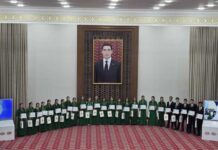
Upon successful completion of the training, participants were awarded internationally recognized certificates issued under the joint Turkmen-Russian partnership.