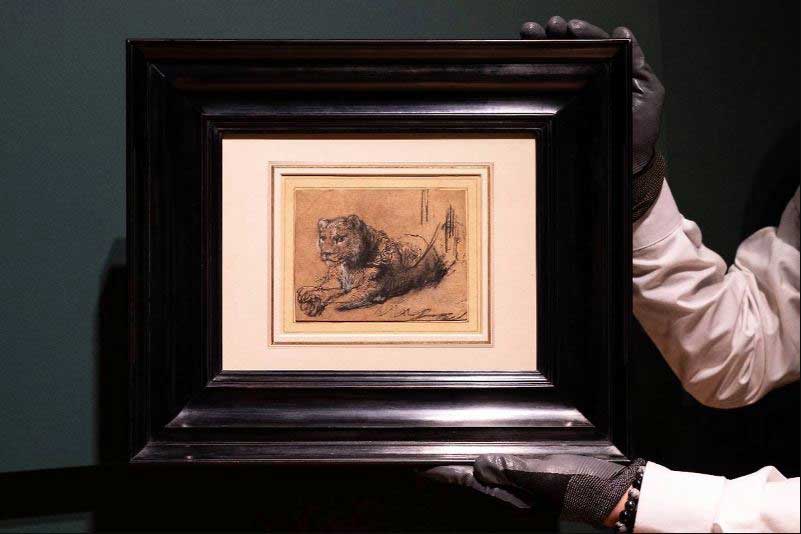



Rembrandt Harmens van Rijn (1606–1669) was a Dutch painter, one of the greatest masters in world history. He was born on July 15, 1606, in Leiden, to a family of craftsmen. Although Rembrandt entered the University of Leiden in 1620, he soon left it and turned to painting. He worked in his native city from 1625 to 1631. In the early years of his work, religious subjects and portraits played a significant role.
His heyday
The year 1632 was a very lucky year for Rembrandt. He moved to Amsterdam and married a wealthy city woman, Saskia van Eylenburg. The painting “The Anatomy Lesson of the Physician” painted that year brought the young artist universal recognition. The happiest decades in the life of the master painter began. He trained many apprentices. During this period, he created such masterpieces as “Self-portrait with Saskia” (1635) and “Danaia” (1636). Rembrandt’s art of the 1630s combined the experiences of the Renaissance and Baroque periods with new approaches.
Life changes
The period of success came to an abrupt end in 1642. His masterpiece “The Night Watch” (a group portrait of the Amsterdam Archers’ Guild), was not accepted by customers. Because the artist departed from the traditional rules of portraiture and gave it too much liveliness and drama. That year, Rembrandt also lost his greatest love, his wife Saskia. From the 40s, he abandoned theatrical impressions and turned to works that reflected a more critical and spiritual world.
Poverty and his last masterpieces
Life’s failures did not leave the artist behind: in 1656, he was declared a debtor, and his property was sold at auction. He spent the rest of his life in a modest house in the Jewish quarter of Amsterdam. But despite the hardships and deteriorating eyesight, he continued to create.
The painting “The Return of the Prodigal Son” (1668–1669), painted towards the end of his life, was the culmination of his entire career. Rembrandt died on October 4, 1669.
Today, Rembrandt’s works are highly valued on the world market. His interest in the animal world and his ability to accurately portray their characteristics further increase the value of this small painting. In addition, the fact that the proceeds from the sale of the work of art were used to protect nature caused a great response in the world community..