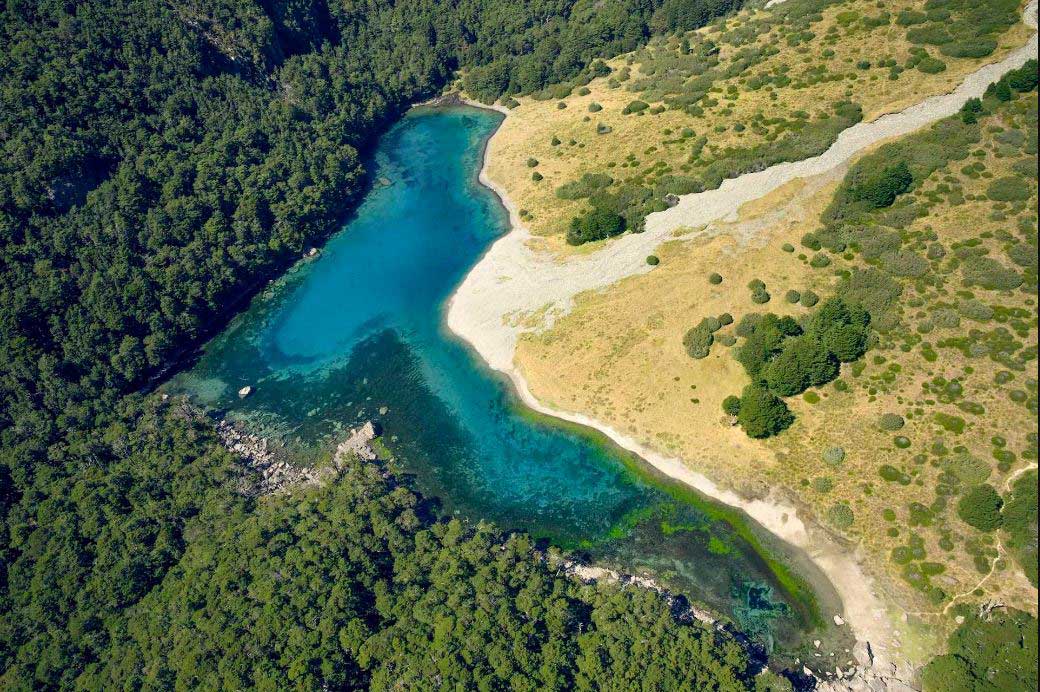



Scientists have identified a body of water with the highest water clarity and explained why it takes on a vibrant blue hue. Research shows that the color and purity of water depend on its composition, depth, and degree of filtration.
In small volumes, water appears colorless, but in seas and lakes, it often appears blue. This is because water molecules absorb long wavelengths of light, including red, while short wavelengths—blue—are scattered and reflected. Mineral particles, sand, and organic compounds can alter the hue, but with minimal impurities, the water remains particularly clear.
Rotomairewhenua, also known as Blue Lake, has been recognized as the clearest freshwater lake. It is located in Nelson Lakes National Park in New Zealand. Measurements have shown visibility of almost 80 meters—a value close to the physical limit for freshwater. This effect is achieved through natural filtration through glacial sediments. Visually, the water produces blue and purple hues. The lake has sacred significance for the Maori people.
Among marine areas, the Weddell Sea in the Southern Ocean boasts comparable transparency. Satellite observations also record the high clarity and deep blue color of the waters in the South Pacific.