


Turkmen and Chinese scientists have strengthened their cooperation in the study of desert areas as part of the Belt and Road initiative. The joint work between the National Institute of Deserts, Flora, and Fauna of Turkmenistan and the Xinjiang Institute of Ecology and Geography of China is focused on studying Chinese experience in protecting transport infrastructure in extreme climates.
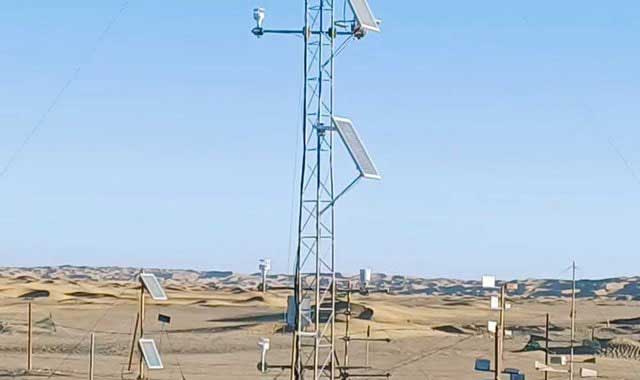
The key focus of the specialists’ research was the highway, which runs through the Taklamakan Desert and stretches for more than 560 kilometers. An artificial forest belt created along the route ensures its sustainable operation, covering over three thousand hectares and containing approximately 20 million drought-resistant plants, as well as a system of electrified wells using mineralized water.
The project has received international recognition and is considered an effective example of biodiversity restoration in arid zones. It promotes the formation of resilient ecosystems and creates favorable habitats for birds and small mammals. Of particular scientific interest is the technology for growing the medicinal plant Cistanche on the root system of saxaul.
The similarity of the natural and climatic conditions of the Taklamakan and Garakum deserts makes the exchange of experience of practical importance. In Turkmenistan, this cooperation is seen as a contribution to the development of sustainable ecosystems, as well as to the implementation of the initiative to establish a UN Regional Climate Technology Centre in Ashgabat.