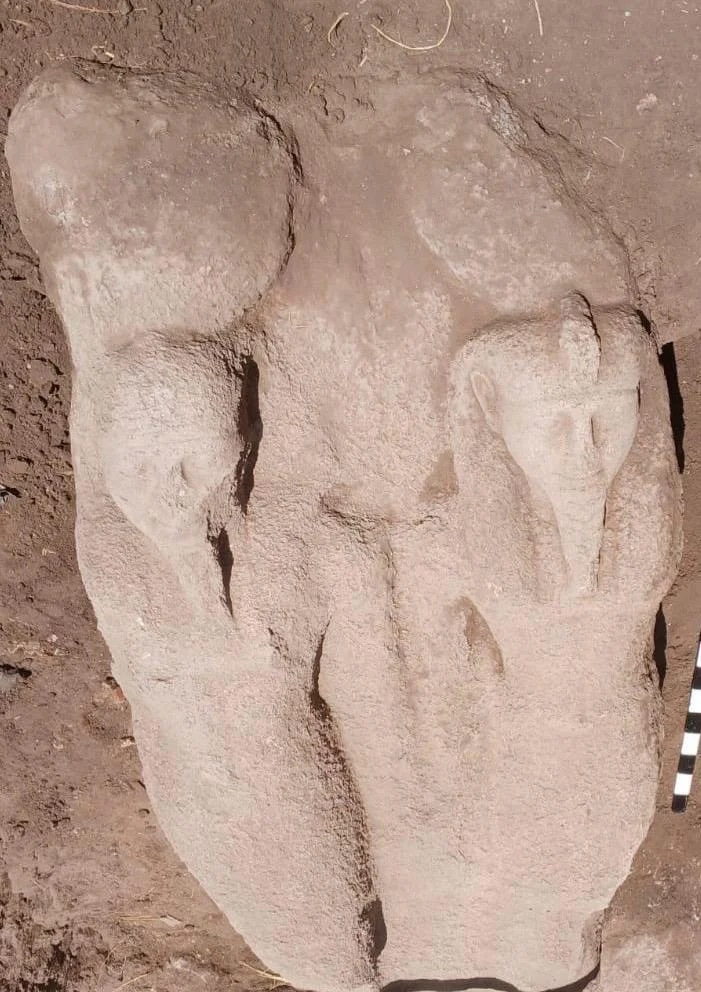
Archaeologists discovered a statue, believed to be of Pharaoh Ramesses II, during excavations in the Al-Sharqiyah Governorate, the Egyptian Ministry of Tourism press service reported.
Specialists found the artifact at the Tell Faroun site in the Al-Husseiniyah region. The statue was missing its lower portion—its legs and base. According to archaeologists, it weighs between 5 and 6 tons and is approximately 2.2 meters long.
“It is in poor condition, and the remaining parts suggest that the statue was part of a triad,” the statement read.
Ramesses II was an ancient Egyptian pharaoh, the third ruler of the 19th dynasty. He ascended the throne at the age of 25. It is believed that he reigned from 1279 to 1213 BC. During the reign of Ramesses II, large-scale construction began in ancient Egypt, and numerous temples were built, including those at Abydos, Thebes, and Edfu.
Professor Mohamed Abdel Badie, head of the Egyptian Antiquities Department, suggested that the statue was moved from the city of Per-Ramesses to Tell Farun in ancient times for installation in a religious complex.
Experts have transported the statue to the museum’s storage facility, where it will be prepared for restoration.
In 2024, archaeologists discovered a sword belonging to Pharaoh Ramesses II. Excavations were conducted in a neighborhood of the city of Hosh Isa in the Beheira Governorate. Scientists found traces of barracks and weapons and food storage facilities dating back to the New Kingdom (16th-11th centuries BCE).