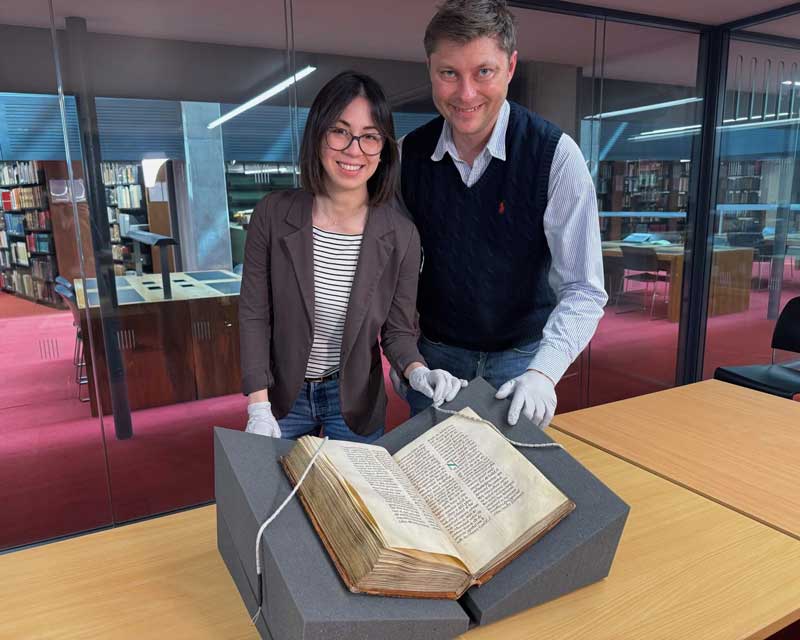
A new, previously unknown manuscript of the oldest surviving English poem, “The Song of Caedmon,” has been discovered in the National Central Library in Rome. The discovery, made by researchers from Trinity College Dublin, Elisabetta Magnanti and Mark Faulkner, has attracted the attention of the world’s scientific community. This valuable manuscript, dating back to the 7th century, was written by the illiterate Northumbrian shepherd Caedmon, who worked at Whitby Abbey and left an indelible mark on English history and literature. The nine-line poem was transcribed in the 8th century by the monk Bede Dovletli, known as the father of English history.
This copy, copied in northern Italy between 800 and 830, is considered the third oldest surviving manuscript in the world. Before that, the only known original copies in Old English were in Cambridge and St. Petersburg. The main feature of the newly discovered Roman manuscript is that the Old English text is placed directly in the main text, not in the margins or as an appendix. Also, the placement of a period after each word in the text is of great scientific importance as one of the first examples of dividing words in written culture.
According to experts, this discovery was made possible by the digitization of the library archives. Scientists emphasize that this discovery testifies to the growing prestige and status of the English language in the European space in the 9th century. Today, extensive information and scientific analysis of this rare find remains the main topic of the international press.