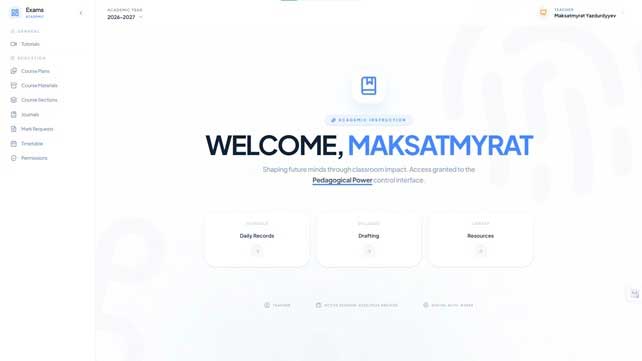
An innovative “Electronic University” platform featuring AI elements—developed jointly by the university’s specialists and students—has been launched at the Oguz Han Engineering and Technology University of Turkmenistan.
This electronic system was created to modernize higher education management, automate academic processes, and improve access to academic information.
Work on the project began in early 2025, with the system being rolled out in stages starting in September of that year. Currently, the platform unites 4,700 undergraduate and 200 master’s students, over 250 faculty members and researchers, and approximately 30 administrative users within a unified digital environment. The “Electronic University” serves as an innovative hub for a significant portion of the university’s academic and administrative activities.
The digital system features dedicated user accounts for key groups: students, faculty members, department heads, and administrators responsible for academic affairs. Users can access necessary academic and administrative information through this single integrated system, in accordance with their specific access rights.
The system enables faculty members and department heads to manage student attendance and academic performance in real-time using electronic gradebooks. Students, in turn, have access to class schedules, curricula, study materials, research articles, books, manuals, presentations, and video content.
The system’s launch has also enabled the electronic recording of results from monthly tests, midterms, final exams, and retakes; the generation of relevant documents in PDF format; and the automated creation of student academic transcripts.
A key feature of the electronic platform is the integration of artificial intelligence technologies with academic analytics. Academic data collected via the system can be analyzed to provide insights into student performance, course mastery, and the effectiveness of the educational process. Thus, AI-driven analytics help tailor approaches to individual students, identify challenging subject areas, and determine the need for additional academic support. This creates new opportunities for data-driven management of the educational process.
The university’s digital system is also accessible to all users via mobile applications for Android and iOS.
The in-house development and implementation of this innovative product by university personnel clearly demonstrates the emergence of a new technological ecosystem within the institution—one that unites specialists and students capable of independently and successfully developing AI-based digital solutions and integrating modern technologies into academic and administrative processes.