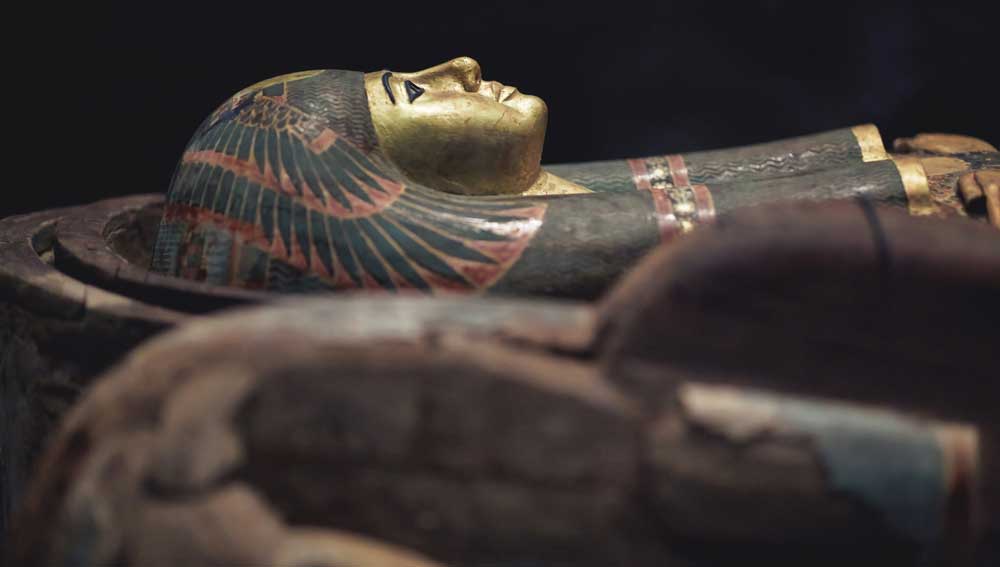
In the Saqqara necropolis near Cairo, archaeologists uncovered a limestone sarcophagus sealed approximately 4300 years ago. The burial chamber was located at the bottom of a 15-meter-deep shaft. The mortar seal had remained intact since burial, making the find exceptionally rare for the Old Kingdom, Earth reports.
Inside the sarcophagus was the mummy of a man named Heka-Shepes. The body was covered in thin sheets of gold, laid over burial shrouds. In ancient Egyptian tradition, gold was associated with the “flesh of the gods”—incorruptible and radiant. Gilding of this scale was only available to a select few and attests to the high social status of the deceased. Inscriptions in the chamber date the burial to the Fifth and Sixth Dynasties (approximately 25th to 22nd centuries BCE), that is, to the Old Kingdom period.
Nine painted limestone figurines were found in the third tomb. The chamber likely belonged to a priest of the royal funerary complex. A surviving carved door slab bears his name. Such statues served as proxies for the deceased, accepting offerings.
Another shaft, 10 meters deep, led to the burial of a man named Fetek. The chamber contained wooden statues, three stone figures, an offering table, and a stone sarcophagus containing a mummy. The preservation of wood in Egyptian soil is rare; the finds require urgent conservation.
Amulets, cosmetic vessels, and household ceramics were collected throughout the complex. Stone vessels presumably contained oils and resins used in embalming. The deity figurines and vessels reflect the practice of funeral offerings, which were to be maintained by priests after the tomb, was sealed. Since gold was the first to be, plundered, cheaper items often become the primary source of information on chronology and rituals.
Wall reliefs record titles, family ties, and scenes of everyday life, turning tombs into personal “documents.” Hieroglyphic inscriptions allow for precise dating within the Fifth and Sixth Dynasties, even in the absence of skeletal remains.
Saqqara is a UNESCO World Heritage Site as the gigantic necropolis of Memphis. Burials belonging to royal priests and high-ranking courtiers were previously discovered near the tomb of Heka-Shepes. Apparently, the site was used for the burial of individuals close to the pharaoh. As a reminder, the Grand Egyptian Museum recently opened near the Giza pyramids.
Work at Saqqara confirms the existence of a complex social hierarchy and developed funerary traditions already in the Old Kingdom. The intact burial of Hek-Shepes provides unique material for the study of rituals, material culture, and beliefs about the afterlife. All finds are undergoing conservation and documentation. Due to limited laboratory capacity, full publication of the results may take several years.