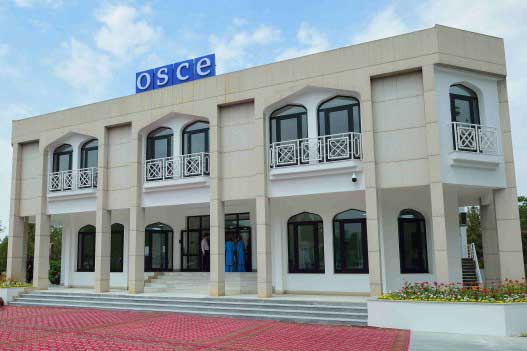



The legislative framework and strategic documents for preventing and combating corruption were the subject of discussion at an OSCE seminar held in a hybrid format on April 15–16.
The OSCE Centre in Ashgabat organized the event to support Turkmenistan in further strengthening its anti-corruption system by implementing good governance standards and building the capacity of specialists in this field.
An international expert from Latvia, participating remotely, provided a detailed discussion of the development and effective implementation of anti-corruption strategies. Particular attention was paid to their objectives, key approaches, and priority measures, as well as standards and recommendations from the UN, the Organization for Economic Co-operation and Development, and the Council of Europe.
“Corruption undermines trust in institutions, threatens economic stability, and hinders sustainable development,” noted William Leaf, Head of the OSCE Centre in Ashgabat.
“That’s why one of the OSCE’s key commitments is combating corruption and eliminating the conditions that facilitate its emergence, including through strengthening legislation, developing strategic frameworks, and promoting accountable governance,” he emphasized.
The seminar served as a platform for sharing best practices from EU and Central Asian countries in developing legislation to prevent corruption and criminalize corruption offenses. Participants discussed measures to improve the institutional structure and develop interagency cooperation.
Representatives of the Mejlis (parliament), as well as key ministries, agencies, and law enforcement agencies of Turkmenistan, including the Ministry of Finance and Economy, the Ministry of Justice, the Prosecutor General’s Office, and the Ministry of Internal Affairs, participated in the event.